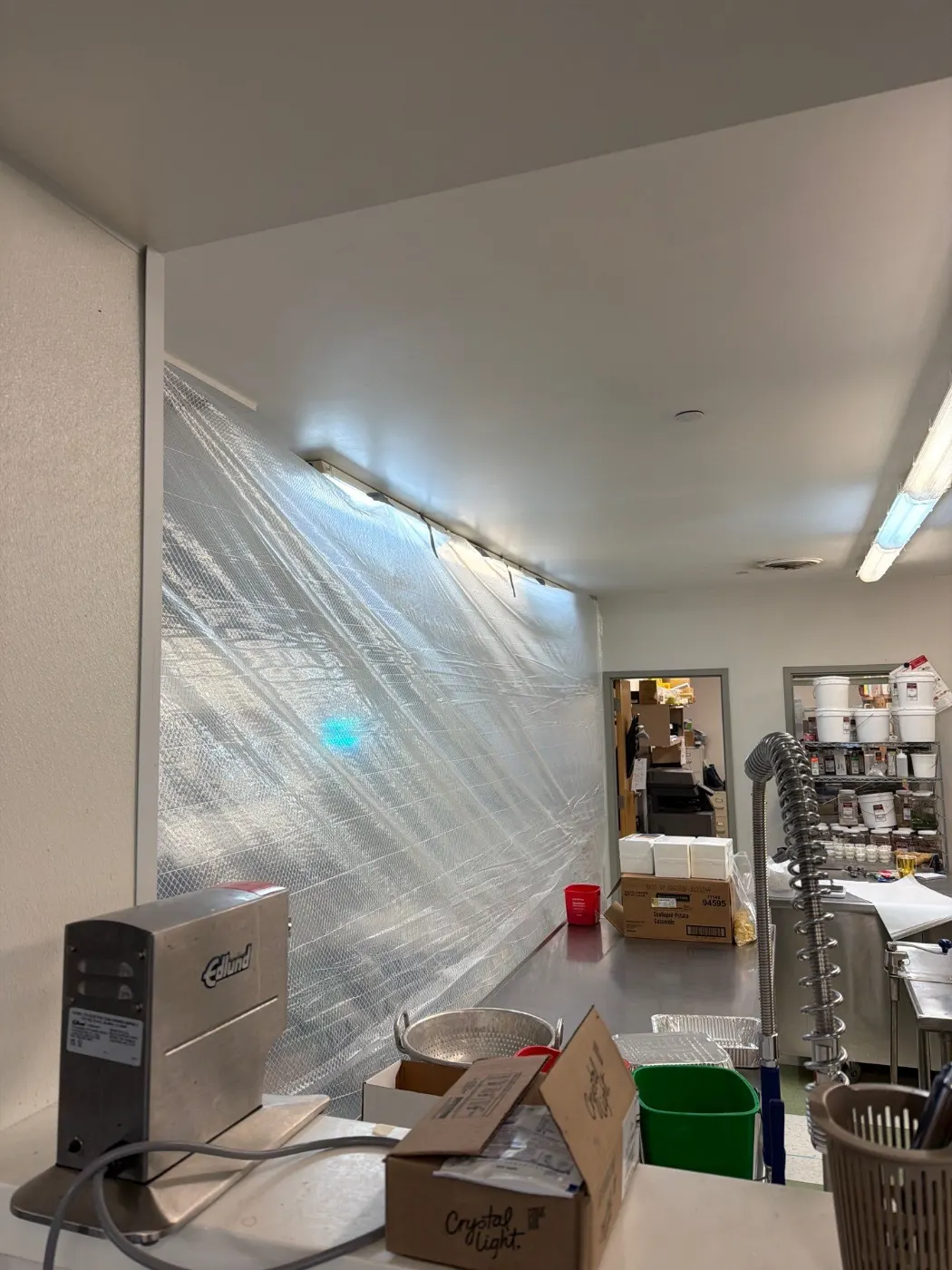
Commercial Water Restoration in Delphi, IN
Fire sprinkler discharge, riser failures and roof drain backups in Delphi get a crew dispatched within 2 hours.
Commercial Water Restoration in Delphi, IN starts with one call to Delphi Water Restoration: live 24/7 dispatch, IICRC certified response, and honest written scopes before work begins. Call (765) 517-7678.
- Service: Commercial Water Restoration for Delphi homeowners
- Service area: Delphi, IN and surrounding areas
- Response time: Rapid emergency dispatch for Delphi inquiries; crews available 24/7
- Licensed and insured (License #RC21100059)
- Serving Delphi, IN since 2018
Commercial Water Damage Restoration in Delphi
We extract water and dry commercial buildings across Delphi, and we're available around the clock.
Site Conditions
Properties near the Wabash River and Deer Creek carry added flood risk in heavy rain. Freeze and thaw cycles each winter can burst pipes in unheated parts of a commercial building. Your building's own drains and roof get checked on the first walkthrough with whoever manages the property.
We cover commercial properties across Delphi, including the area around Delphi Community High School and Delphi Public Library. We also handle commercial water losses in Camden, Lafayette, Monticello and Logansport.
Commercial Water Restoration for Delphi Businesses
Heavy rain backed something up, and now water is coming in at ceiling level and tracking down interior columns and wall cavities. The visible wet spot is the smallest part of it. Delphi Water Restoration dispatches crews to commercial water losses in Delphi within 2 hours with thermal imaging and meters to find where the water went, then dries the assemblies it reached before the gypsum board and insulation go bad.
Electrical rooms, IT closets and records rooms get their own plan. Delphi Water Restoration waits for your electrician to deenergize the affected circuits and for your IT contractor to protect the hardware, then dries those rooms under tighter humidity control with more frequent readings. Power comes back after the readings clear and your contractors sign off in your Delphi building.
Contents and records get triaged alongside the structure. Paper, media and inventory come off wet floors first, get inventoried and photographed, and go to dry storage or out to a specialty vendor when the material needs freeze drying. Furniture gets blocked up off damp flooring. Delphi Water Restoration crews keep the inventory list in the same file as the moisture log, so you get one package.
Cause documentation happens before the evidence disappears. Crews photograph the failed component, the water path and the saturation pattern, note the time the source was isolated, and keep the failed part when it's removable. Cause is one of the first things a carrier asks about, so Delphi Water Restoration treats source photographs as part of the job. Your plumber's or your engineer's report goes into the same file.
Phone before staff start cleaning up, so the first photographs show the loss as it was found. Delphi Water Restoration documents the wet areas of your Delphi building and sets the drying plan from the moisture map, which gives your carrier and your owner the same starting record.
Signs You Need Commercial Water Restoration
If you notice any of these in your Delphi building, schedule a free inspection before the issue worsens.
Water pooling at the base of an interior column or along a demountable partition track
Wood flooring in a gym or sanctuary cupping along the edges after a leak
Standpipe or sprinkler system testing that left water on a floor with no drain
Drips from a ceiling mounted fan coil unit or a variable air volume box
A pipe split in an unheated vestibule or loading dock after a cold snap
Pallets or cardboard cases showing a wick line a few inches up from the slab
Carpet in the sanctuary or fellowship hall squishing underfoot after a weekend storm
Sprinkler head knocked loose by a ladder or a forklift and discharging into the aisle
Ice building up on a walk in cooler floor where water collected and refroze
Chilled water pipe insulation dripping onto the ceiling tiles below it
How Delphi Water Restoration Handles Commercial Water Restoration
We follow these steps in order on every Delphi job.
Emergency Call Intake
The person who answers asks where the water is coming from in your Delphi building and whether the source is shut off. Access details and your engineer's contact get collected, and you hear what to move and what to leave in place for photographs.
Dispatch and Site Access
A crew dispatches to the property once the call comes in. The team sends the certificate of insurance and vendor paperwork ahead, so badging, loading dock use and freight lift access are cleared before the truck arrives.
Engineering Walkthrough
Walkthrough runs with your building engineer to isolate the source, confirm which risers and panels are involved, and identify occupied areas that have to keep operating. Access needs and after hours windows get set during the same visit.
Extraction at Scale
Submersible pumps take standing water, truck mounted units pull saturation from commercial carpet and glue down assemblies, and weighted heads work the backing. Crews move in sections on large floor plates so water doesn't get pushed into dry space.
Structural Drying Design
Dehumidification gets sized from affected cubic footage and material porosity, with dry air ducted into ceiling plenums, wall cavities and shafts. Air movers get placed to keep surface air moving, and the calculation gets revised as readings change.
Commercial Water Restoration in Delphi
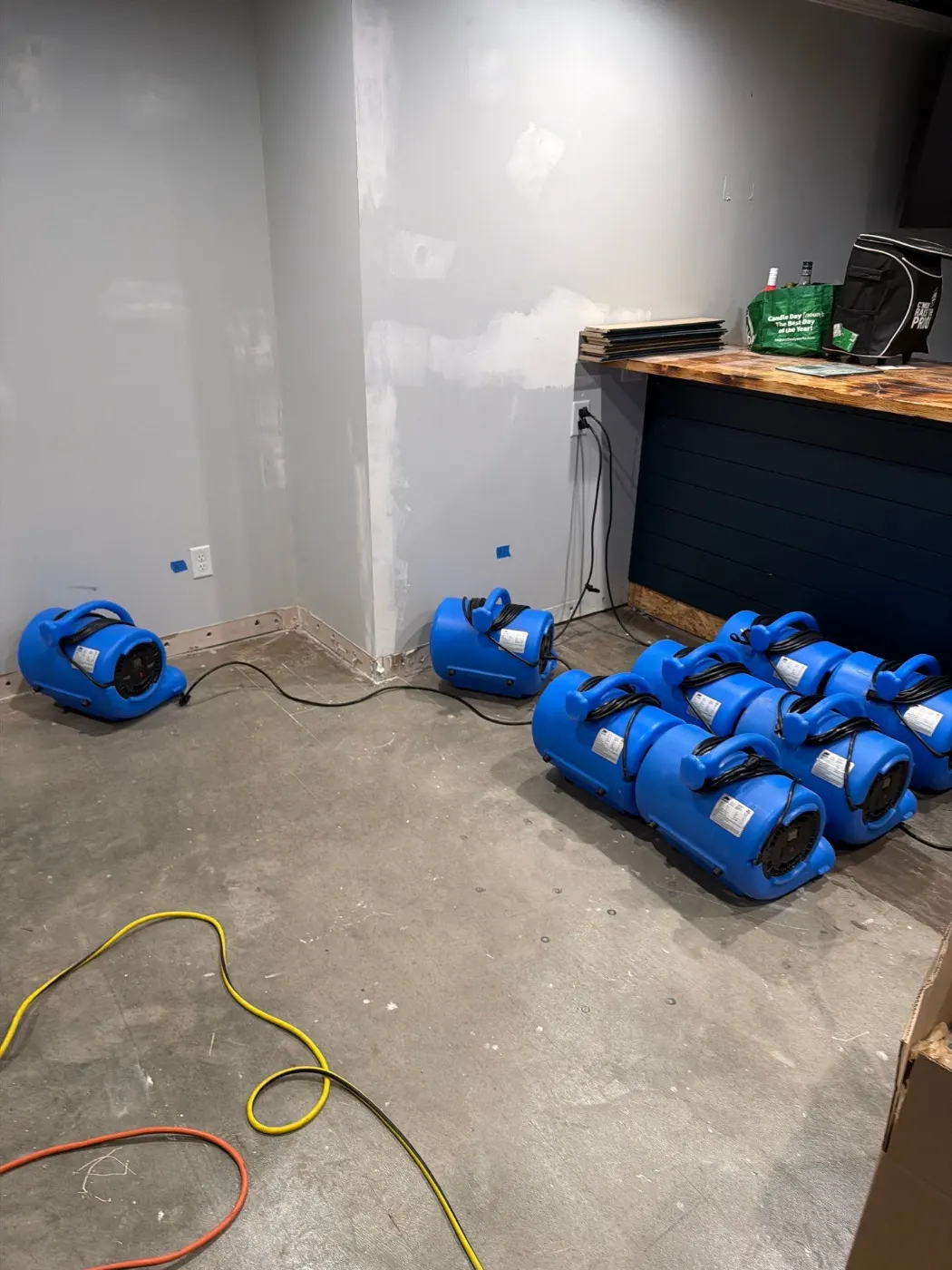
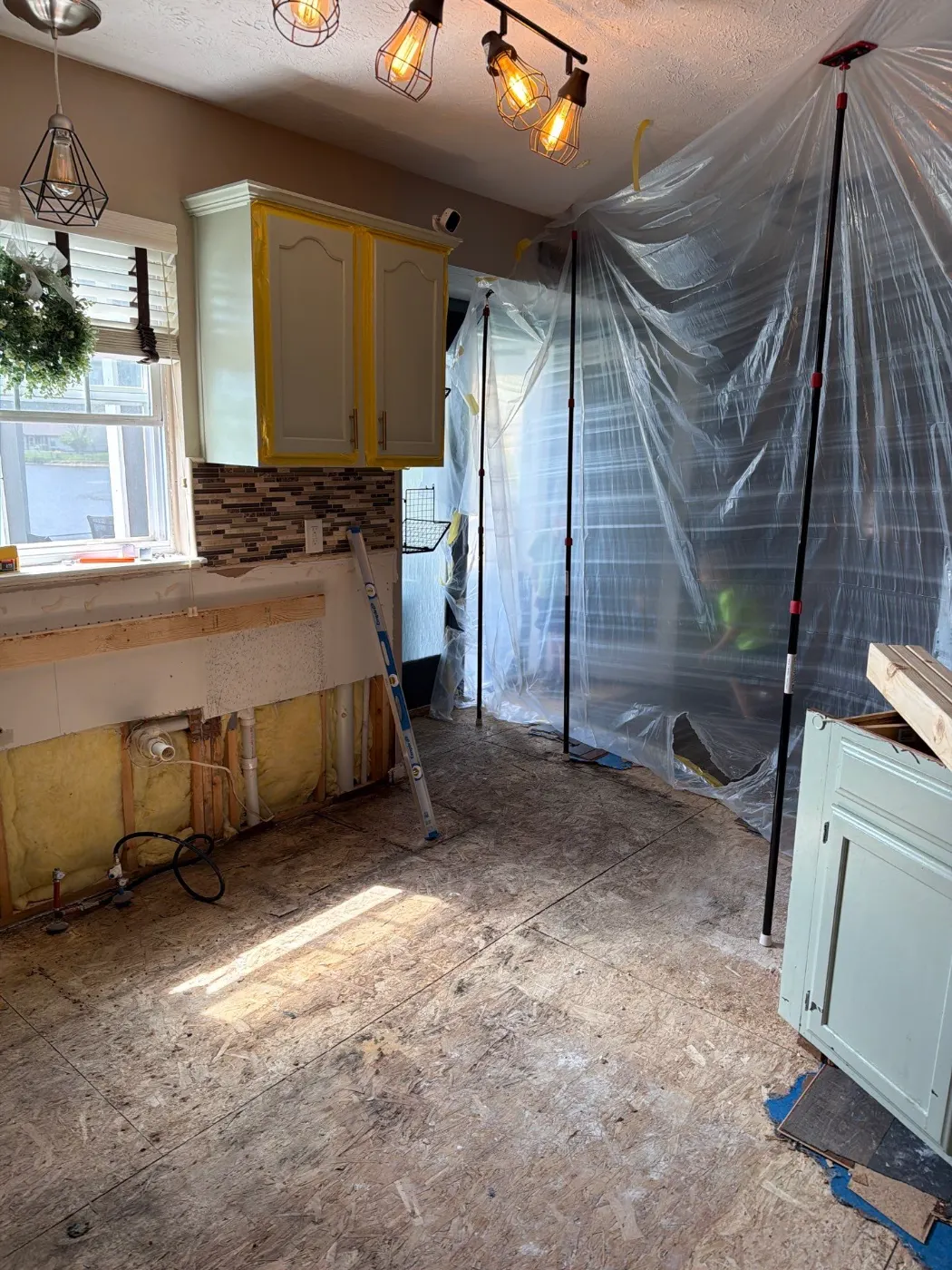
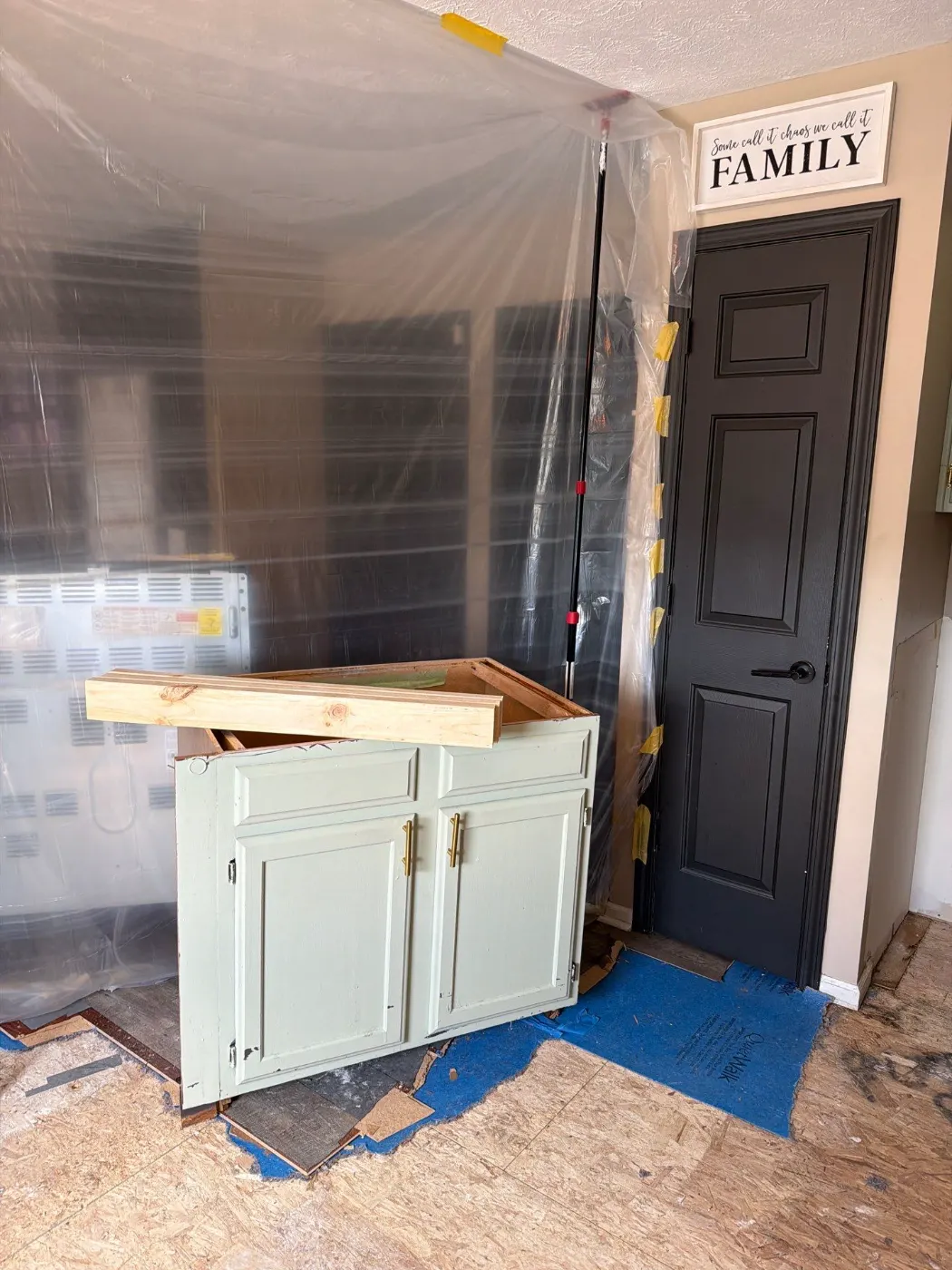
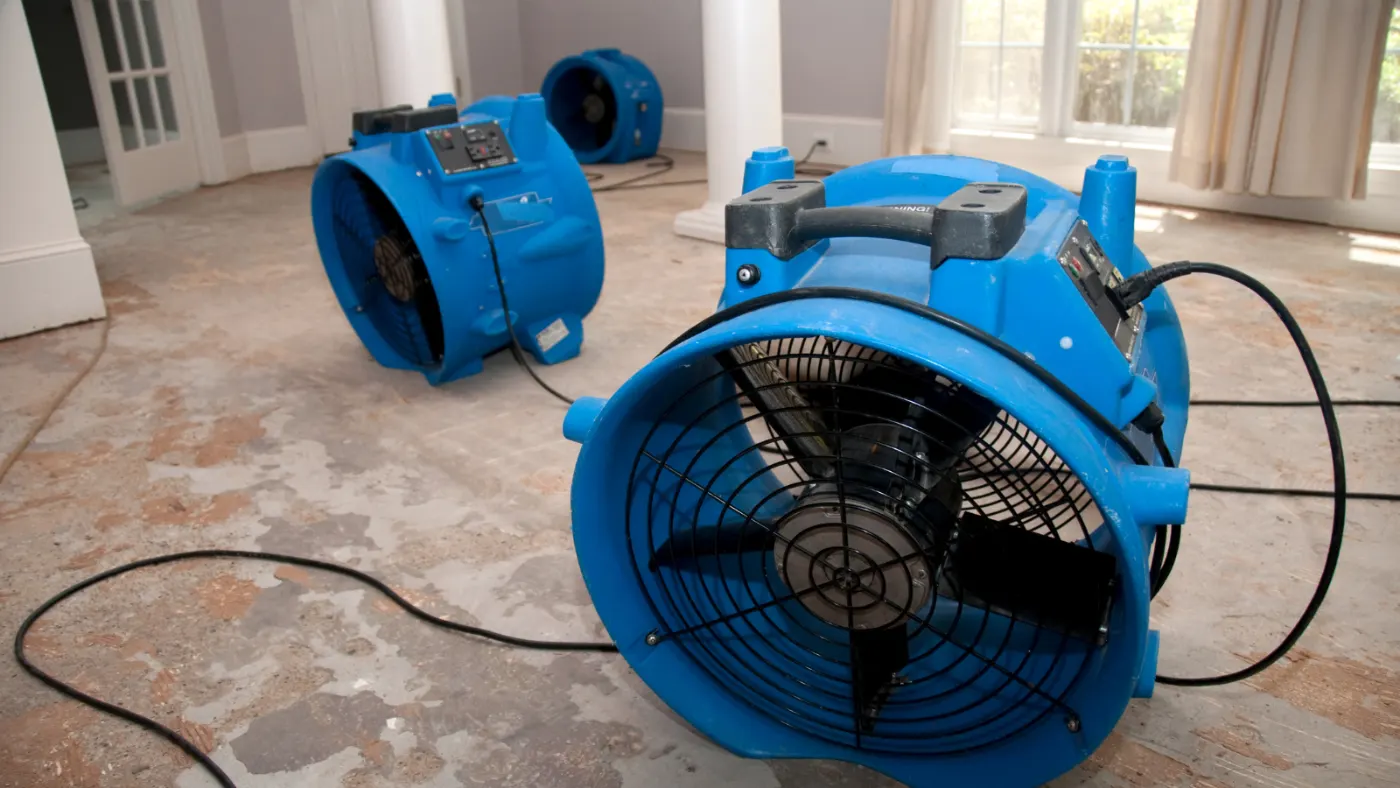
Photographs from real commercial water restoration jobs completed by our crew in Delphi and surrounding areas.
Commercial Water Restoration FAQ
Questions Delphi property managers ask us about commercial water restoration.
Guidance and Standards for Commercial Water Restoration
- The ANSI/IICRC S500 is the published standard for professional water damage restoration. The current edition is the Fifth Edition, 2021. IICRC S500 Standard
- EPA advises drying water damaged areas and items within 24 to 48 hours to prevent mold growth. EPA: A Brief Guide to Mold, Moisture and Your Home
Delphi Neighborhoods We Serve
We take commercial water restoration calls in every part of Delphi. Pick your neighborhood for local details.
Other Restoration Services in Delphi
Delphi Water Restoration handles the full scope of restoration work. Explore our other services below.
Water Damage Restoration in Delphi
24/7 emergency response. IICRC certified water restoration from extraction to full dry out.
Learn more →Basement Flooding in Delphi
Basement water emergencies handled fast. Extraction, drying, mold prevention.
Learn more →Sewage Cleanup in Delphi
Category 3 biohazard cleanup. Full containment, decontamination, structural restoration.
Learn more →Request Commercial Water Restoration
Reach Us Directly
Our team is available 24/7 for emergencies and ready to schedule inspections during business hours.
Need Immediate Help?
For active water or mold emergencies, call us directly. We are available 24/7.